Produktbeschreibung
RV series Characteristics
- RV – Sizes:–150
- Input Options: with input shaft, With Square flange,With Input Flange
- Input Power 0.06 to 11 kW
- RV-Size from 030 to 105 in die-cast aluminium alloy budy and over 110 in cast iron
- Ratios between 5 and 100
- Max torque 1550 N.m and admissible output radial loads max 8771 N
- Aluminium units are supplied complete with synthetic oil and allow for universal mounting positions, with no need to modify lubricant quantity
- Worm wheel: Copper (KK Cu).
- Loading capacity in accordance with: ISO 9001:2015/GB/T 19001-2016
- Size 030 and over are painted with RAL 5571 blue
- Worm gear reducers are available with diffferent combinations: NMRV+NMRV, NMRVpower+NMRV, JWB+NMRV
- NMRV, NRV+VS,NMRV+AS,NMRV+VS,NMRV+F
- Options: torque arm, output flange, viton oil seals, low/high temperature oil, filling/drain/breather/level plug,Small gap
Basic models can be applied to a wide range of power reduction ratios from 5 to 1000.
Warranty: One year from date of delivery.
| WORM GEARBOX | |||||
| SNW SERIES | Output Speed Range: | ||||
| Typ | Old Type | Output Torque | Durchmesser der Abtriebswelle | 14rpm-280rpm | |
| SNW030 | RV030 | 21N.m | φ14 | Applicable Motor Power: | |
| SNW040 | RV040 | 45N.m | φ19 | 0.06kW-11kW | |
| SNW050 | RV050 | 84N.m | φ25 | Input Options1: | |
| SNW063 | RV063 | 160N.m | φ25 | With Inline AC Motor | |
| SNW075 | RV075 | 230N.m | φ28 | Input Options2: | |
| SNW090 | RV090 | 410N.m | φ35 | With Square flange | |
| SNW105 | RV105 | 630N.m | φ42 | Input Options3: | |
| SNW110 | RV110 | 725N.m | φ42 | With Input Shaft | |
| SNW130 | RV130 | 1050N.m | φ45 | Input Options4: | |
| SNW150 | RV150 | 1550N.m | φ50 | With Input Flange |
Starshine Drive
ZheJiang CHINAMFG Drive Co.,Ltd,the predecessor was a state-owned military mould enterprise, was established in 1965. CHINAMFG specializes in the complete power transmission solution for high-end equipment manufacturing industries based on the aim of “Platform Product, Application Design and Professional Service”.
Starshine have a strong technical force with over 350 employees at present, including over 30 engineering technicians, 30 quality inspectors, covering an area of 80000 square CHINAMFG and kinds of advanced processing machines and testing equipments. We have a good foundation for the industry application development and service of high-end speed reducers & variators owning to the provincial engineering technology research center,the lab of gear speed reducers, and the base of modern R&D.
Our Team
Quality Control
Quality:Insist on Improvement,Strive for Excellence With the development of equipment manufacturing indurstry,customer never satirsfy with the current quality of our products,on the contrary,wcreate the value of quality.
Quality policy:to enhance the overall level in the field of power transmission
Quality View:Continuous Improvement , pursuit of excellence
Quality Philosophy:Quality creates value
3. Incoming Quality Control
To establish the AQL acceptable level of incoming material control, to provide the material for the whole inspection, sampling, immunity. On the acceptance of qualified products to warehousing, substandard goods to take return, check, rework, rework inspection; responsible for tracking bad, to monitor the supplier to take corrective measures
to prevent recurrence.
4. Process Quality Control
The manufacturing site of the first examination, inspection and final inspection, sampling according to the requirements of some projects, judging the quality change trend;
found abnormal phenomenon of manufacturing, and supervise the production department to improve, eliminate the abnormal phenomenon or state.
5. FQC(Final QC)
After the manufacturing department will complete the product, stand in the customer’s position on the finished product quality verification, in order to ensure the quality of
customer expectations and needs.
6. OQC(Outgoing QC)
After the product sample inspection to determine the qualified, allowing storage, but when the finished product from the warehouse before the formal delivery of the goods, there is a check, this is called the shipment inspection.Check content:In the warehouse storage and transfer status to confirm, while confirming the delivery of the product
is a product inspection to determine the qualified products.
Verpackung
Delivery
/* 22. Januar 2571 19:08:37 */!function(){function s(e,r){var a,o={};try{e&&e.split(“,“).forEach(function(e,t){e&&(a=e.match(/(.*?):(.*)$/))&&1
| Anwendung: | Machinery, Agricultural Machinery |
|---|---|
| Härte: | Gehärtete Zahnoberfläche |
| Installation: | Horizontaler Typ |
| Layout: | Shunting |
| Zahnradform: | Worm and Worm Wheel |
| Schritt: | Einzelschritt |
| Anpassung: | Verfügbar | Kundenspezifische Anfrage |
|---|
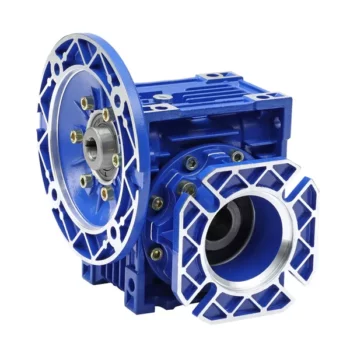
Self-Locking Properties in a Worm Gearbox
Yes, worm gearboxes exhibit self-locking properties, which can be advantageous in certain applications. Self-locking refers to the ability of a mechanism to prevent the transmission of motion from the output shaft back to the input shaft when the system is at rest. Worm gearboxes inherently possess self-locking properties due to the unique design of the worm gear and worm wheel.
The self-locking behavior arises from the angle of the helix on the worm shaft. In a properly designed worm gearbox, the helix angle of the worm is such that it creates a mechanical advantage that resists reverse motion. When the gearbox is not actively driven, the friction between the worm threads and the worm wheel teeth creates a locking effect.
This self-locking feature makes worm gearboxes particularly useful in applications where holding a load in position without external power is necessary. For instance, they are commonly used in situations where there’s a need to prevent a mechanism from backdriving, such as in conveyor systems, hoists, and jacks.
However, it’s important to note that while self-locking properties can be beneficial, they also introduce some challenges. The high friction between the worm gear and worm wheel during self-locking can lead to higher wear and heat generation. Additionally, the self-locking effect can reduce the efficiency of the gearbox when it’s actively transmitting motion.
When considering the use of a worm gearbox for a specific application, it’s crucial to carefully analyze the balance between self-locking capabilities and other performance factors to ensure optimal operation.
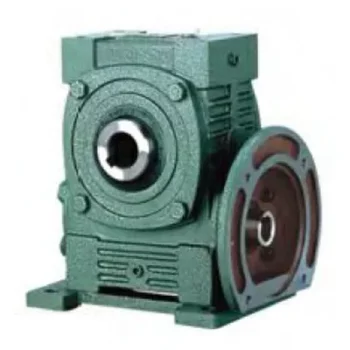
Schneckengetriebe vs. Stirnradgetriebe: Ein Vergleich
Schneckengetriebe und Stirnradgetriebe sind zwei gängige Getriebearten, jede mit ihren eigenen Vor- und Nachteilen. Vergleichen wir sie:
| Aspekt | Schneckengetriebe | Stirnradgetriebe |
| Effizienz | Geringerer Wirkungsgrad aufgrund der Gleitreibung zwischen Schnecke und Schneckenrad. | Höherer Wirkungsgrad durch Wälzkontakt zwischen den Zähnen des Schrägverzahnungsgetriebes. |
| Drehmomentübertragung | Hervorragende Drehmomentübertragung und hohe Untersetzungsverhältnisse in einer einzigen Stufe erreichbar. | Gute Drehmomentübertragung, jedoch können für hohe Untersetzungsverhältnisse mehrere Stufen erforderlich sein. |
| Lärm und Vibrationen | Im Allgemeinen sind die Geräusch- und Vibrationspegel aufgrund der Gleitbewegung höher. | Geringere Geräusch- und Vibrationspegel dank gleichmäßigerem Wälzkontakt. |
| Gegenreaktion | Höheres systembedingtes Spiel aufgrund der Konstruktion. | Geringeres Spiel durch Ineinandergreifen der spiralförmigen Zähne. |
| Effizienz bei höheren Geschwindigkeiten | Aufgrund von Effizienzverlusten weniger geeignet für Hochgeschwindigkeitsanwendungen. | Aufgrund des höheren Wirkungsgrades besser geeignet für Hochgeschwindigkeitsanwendungen. |
| Überlastschutz | Die natürliche Selbstverriegelungsfunktion bietet einen gewissen Überlastungsschutz. | Möglicherweise verfügen sie nicht über denselben inhärenten Überlastungsschutz. |
| Anwendungen | Wird häufig für Anwendungen eingesetzt, die hohe Untersetzungsverhältnisse erfordern, wie z. B. Fördersysteme und Schwerlastmaschinen. | Weit verbreitet in verschiedenen Anwendungsbereichen, darunter Automobilgetriebe, Industriemaschinen und mehr. |
Sowohl Schnecken- als auch Stirnradgetriebe haben ihren Platz im Maschinenbau, wobei die Wahl zwischen ihnen von den spezifischen Anforderungen der jeweiligen Anwendung abhängt. Schneckengetriebe werden bevorzugt für Anwendungen mit hohen Untersetzungsverhältnissen eingesetzt, während Stirnradgetriebe aufgrund ihres höheren Wirkungsgrades und ruhigeren Laufs gewählt werden.
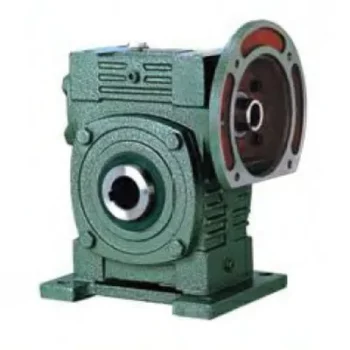
Arten von Schneckengetriebekonfigurationen und ihre Anwendungsbereiche
Die Bauformen von Schneckengetrieben variieren je nach Anordnung der Schnecke und des dazugehörigen Zahnrads. Hier sind gängige Typen und ihre Anwendungsbereiche:
- Einfach umhüllendes Schneckengetriebe: Diese Konfiguration bietet ein hohes Drehmoment und einen hohen Wirkungsgrad. Sie wird in anspruchsvollen Anwendungen wie Bergbaumaschinen und Industriemaschinen eingesetzt.
- Doppelt umhüllendes Schneckengetriebe: Durch die vergrößerte Kontaktfläche bietet dieser Typ eine höhere Belastbarkeit und verbesserte Effizienz. Er findet Anwendung in der Luft- und Raumfahrt, der Robotik und im Präzisionsmaschinenbau.
- Schneckengetriebe ohne Kehle: Dieser Typ verfügt über eine zylindrische Schnecke ohne Kehle. Er eignet sich für Anwendungen, die eine präzise Bewegungssteuerung erfordern, wie beispielsweise CNC-Maschinen und Roboter.
- Schneckengetriebe mit Kehle: Diese Konfiguration mit einem Verzahnungskeil in der Schnecke ermöglicht ein sanftes Einrücken und eine höhere Tragfähigkeit. Sie findet Anwendung in Förderbändern, Aufzügen und der Automobilindustrie.
- Nichtmodulares Schneckengetriebe: Bei dieser Konstruktion bilden Schnecke und Zahnrad ein perfekt aufeinander abgestimmtes Paar, was zu einem besseren Eingriff und höherer Effizienz führt. Sie findet in verschiedenen Branchen Anwendung, in denen individuelle Anpassungen unerlässlich sind.
- Modulares Schneckengetriebe: Diese Bauart ermöglicht den Austausch von Schnecken- und Zahnradkomponenten und bietet somit Flexibilität bei Konstruktion und Wartung. Sie wird häufig in Förderbändern, Mischern und Materialförderanlagen eingesetzt.
Die Wahl der passenden Schneckengetriebekonfiguration hängt von Faktoren wie Belastbarkeit, Wirkungsgrad, Präzision und Anwendungsanforderungen ab. Die Beratung durch Getriebeexperten kann Ihnen helfen, die optimale Konfiguration für Ihre spezifischen Bedürfnisse zu ermitteln.


editor by CX 2024-03-07