Guideline
1. Introduction
Worm gear reducers are a crucial component in mechanical power transmission systems, widely used for their compact size, high reduction ratios, and unique features such as self-locking capabilities. As industries such as manufacturing, automation, and robotics continue to grow, the demand for more efficient, compact, and high-torque gear solutions is increasing. This white paper provides a detailed explanation of the design principles, key parameters, advantages, and typical industry applications of worm gear reducers, with insights into optimal selection and performance.
2. Design Principles
2.1 Basic Structure and Transmission Principle
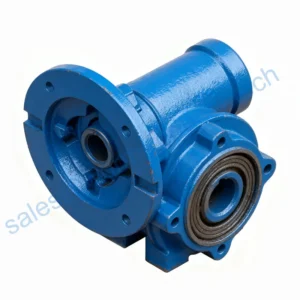
A worm gear reducer consists primarily of a worm (similar to a screw) and a worm wheel. The worm meshes with the worm wheel, transferring torque and reducing speed through sliding contact. One of the most notable features of worm gears is their high reduction ratio, compact design, and typically 90-degree arrangement of input and output shafts.
When the worm rotates one full revolution, a single-start worm typically moves the worm wheel by just one tooth, allowing for very high reduction ratios. (machinedesign.com)
2.2 Key Geometric Parameters
The design of a worm gear involves several geometric parameters that directly affect its reduction ratio, efficiency, torque capacity, backlash, and lifespan. These parameters include:
Lead angle of the worm and the number of starts (how the worm’s threads are arranged).
Number of teeth and module of the worm wheel.
Center distance between the worm and worm wheel shafts.
Material pairing, surface treatments, and lubrication.
For example, the “lead angle” affects the amount of sliding contact between the worm and worm wheel, impacting efficiency and the ability to self-lock. (ptsmake.com)
2.3 Transmission Efficiency and Self-Locking Characteristics
Worm gears are often chosen for their self-locking capability, meaning that under certain conditions, the worm cannot drive the worm wheel in reverse, making them ideal for applications where reverse motion needs to be prevented.
However, due to the sliding contact between the worm and the worm wheel, worm gear reducers typically have lower efficiency compared to other gear systems. The efficiency can range from 30% to 90%, depending on the specific design (e.g., tooth count, lead angle, material, lubrication). (ptsmake.com)
2.4 Materials and Lubrication Design
To improve the performance and longevity of worm gear reducers, the following practices are commonly used:
Worms are often made from alloy steel (e.g., 20CrMnTi) and treated with carburizing, quenching, or grinding processes to strengthen the surface. (zhygear.com)
Worm wheels are typically made from bronze (e.g., ZCuSn10Pb1) to withstand sliding wear.
Lubrication methods can include oil baths, forced circulation, and even cooling channels to address the heat generated by sliding friction. (machinedesign.com)
2.5 Selection and Optimization Considerations
When selecting and optimizing worm gear reducers, the following technical factors should be considered:
Load conditions (torque, shock loads, environmental factors)
Desired reduction ratio (including the number of teeth, lead angle, and number of starts)
Available installation space and layout
Efficiency and heat management requirements
Lifespan and maintenance cycle
Self-locking and safety requirements
For example, research has used nonlinear programming to optimize worm gear designs, reducing the size of the bronze worm wheel while maintaining strength and ensuring cost efficiency. (zhygear.com)
3. Advantages of Worm Gear Reducers
Worm gear reducers have several significant advantages over other types of gear reducers (e.g., spur gears, helical gears):
High Reduction Ratios: Single-stage worm gears can achieve high reduction ratios, such as 20:1, 30:1, or higher, making them ideal for compact applications. (santramengineers.com)
90-Degree Shaft Arrangement: Input and output shafts are typically arranged at 90 degrees, allowing for flexible space utilization. (machinedesign.com)
Self-Locking Capability: In some designs, the worm gear provides self-locking, preventing reverse motion, which is especially useful in safety-critical applications. (chinachenyue.com)
Compact Design, Low Noise: Due to their sliding contact, worm gears are ideal for applications requiring compactness and low noise. (taiwan-drive.com)
Flexible Installation: Worm gears offer a variety of mounting options and are adaptable to a wide range of conditions. (ganternorm.com)
However, it is important to consider their inherent drawbacks, such as lower efficiency compared to pure rolling gear systems, higher sliding wear, and greater heat management requirements.
4. Industry Applications
Worm gear reducers are widely used in various industries due to their unique advantages. Here are some typical applications and their functional requirements:
4.1 Conveyor Systems / Material Handling
Worm gear reducers are commonly used in conveyor belts, drum drives, and material handling equipment, where high torque and stable operation are needed. Their compactness and efficiency make them an excellent choice for these applications. (sgrgear.com)
4.2 Lifting / Hoisting Equipment
Cranes, winches, and hoists often require high torque and self-locking features to prevent reverse motion. Worm gear reducers provide the necessary mechanical advantages for these types of lifting systems. (ptsmake.com)
4.3 Packaging Machinery and Automation
In the food, beverage, pharmaceutical, and electronics industries, automation lines require precise positioning, low noise, and compact designs. Worm gear reducers excel in these environments, offering reliable and efficient solutions. (wormgearreducer.com)
4.4 Robotics / Precision Motion Control
As industrial robots and AI robots increasingly require precise movement, long lifespan, and reverse-locking capabilities, worm gear reducers have found a growing role in motion control and robotics. (zhygear.com)
4.5 Other Applications
Other industries where worm gear reducers are widely used include solar tracking systems, agricultural machinery, mining equipment, and spiral conveyors. (hzyhgearbox.com)
5.Selection Tips & Considerations
When selecting and using worm gear reducers, consider the following recommendations:
Clearly define the load conditions (torque, shock loads, environmental factors).
Select the appropriate reduction ratio, considering the number of starts, teeth, and lead angle.
Choose materials and lubrication methods based on the load capacity and environmental conditions.
Ensure proper heat management, especially for high-power, high-speed, continuous-use applications.
Regularly maintain and check for lubrication, temperature, backlash, and wear.
Consider the expected lifespan, maintenance intervals, and replacement costs.