Produktbeschreibung
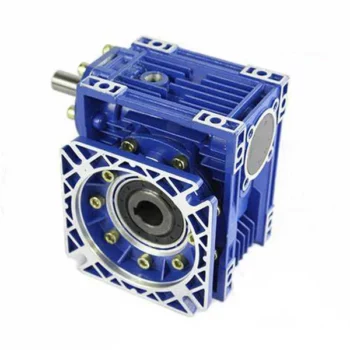
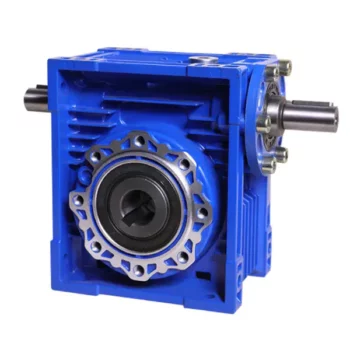
Hot Sale Worm Gearbox RV with Big Torque
Komponenten:
1. Housing: Die-cast Aluminium Alloy Gearbox (RV571~RV090)
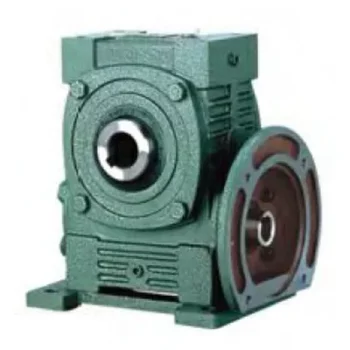
Getriebe aus Gusseisen (RV110~RV150)
2. Worm Wheel: Wearable Tin Bronze Alloy, Aluminum Bronze Alloy
3. Worm Shaft: 20Cr Steel, carburizing, quenching, grinding, surface hardness 56-62HRC, 0.3-0.5mm remaining carburized layer after precise grinding
4. Eingabekonfigurationen:
Ausgestattet mit Elektromotoren (Wechselstrommotor, Bremsmotor, Gleichstrommotor, Servomotor)
IEC-normierter Motorflansch
Vollwelleneingang
Eingang für Schneckenwellen-Endverlängerung
5. Ausgabekonfigurationen:
Keilwellenausgang
Hohlwelle mit Abtriebsflansch
Steckbarer CHINAMFG-Wellenausgang
6. Spare Parts: Worm Shaft Tail Extension, Single Output Shaft, Double Output Shaft, Output Flange, Torque Arm, Dust Cover
7. Getriebelackierung:
Getriebe aus Aluminiumlegierung:
Nach dem Kugelstrahlen, der Korrosionsschutzbehandlung und der Phosphatierung wird die Oberfläche in den Farben RAL 5571 Enzianblau oder RAL 7035 Hellgrau lackiert.
Getriebe aus Gusseisen:
Nach dem Anstrich mit roter Rostschutzfarbe mit der Farbe RAL 5571 Enzianblau streichen.
Modelle:
Hohlwelleneingang mit IEC-normiertem Motorflansch
RV571~RV150
Vollwelleneingang
RV571~RV150
Merkmale:
1. Hochwertiges Getriebe aus Aluminiumlegierung, leicht und rostfrei
2. Zwei optionale Schneckenradmaterialien: Zinnbronze oder Aluminiumbronzelegierung
3. Standardteile und hohe Flexibilität hinsichtlich Wellenkonfigurationen und Motorflanschschnittstelle
4. Mehrere optionale Montageoptionen
5. Geräuscharm, hohe Wärmeableitungseffizienz
Parameter:
| Modelle | Nennleistung | Nennverhältnis | Eingangslochdurchmesser | Eingangswellendurchmesser | Auslasslochdurchmesser | Durchmesser der Abtriebswelle | Mittelpunktabstand | |||||||||||||||||||||||||||||||||
| RV571 | 0,06 kW bis 0,12 kW | 5~60 | Φ9 | Φ9 | Φ11 | Φ11 | 25 mm | |||||||||||||||||||||||||||||||||
| RV030 | 0,06 kW bis 0,25 kW | 5~80 | Φ9(Φ11) | Φ9 | Φ14 | Φ14 | 30 mm | |||||||||||||||||||||||||||||||||
| RV040 | 0,09 kW bis 0,55 kW | 5~1 Fax: Mobile: Address: No.1394, CHINAMFG Road, HangZhou, China Zip Code: 450016 Sollten Sie Interesse an unseren Produkten haben, kontaktieren Sie mich bitte. /* 22. Januar 2571 19:08:37 */!function(){function s(e,r){var a,o={};try{e&&e.split(“,“).forEach(function(e,t){e&&(a=e.match(/(.*?):(.*)$/))&&1
Common Problems and Troubleshooting for Worm GearboxesWorm gearboxes, like any mechanical component, can experience various issues over time. Here are some common problems that may arise and possible troubleshooting steps:
If you encounter any of these problems, it’s important to address them promptly to prevent further damage and maintain the performance of your worm gearbox. Regular maintenance, proper lubrication, and addressing issues early can help extend the lifespan and reliability of the gearbox.
Schneckengetriebe vs. Stirnradgetriebe: Ein VergleichSchneckengetriebe und Stirnradgetriebe sind zwei gängige Getriebearten, jede mit ihren eigenen Vor- und Nachteilen. Vergleichen wir sie:
Sowohl Schnecken- als auch Stirnradgetriebe haben ihren Platz im Maschinenbau, wobei die Wahl zwischen ihnen von den spezifischen Anforderungen der jeweiligen Anwendung abhängt. Schneckengetriebe werden bevorzugt für Anwendungen mit hohen Untersetzungsverhältnissen eingesetzt, während Stirnradgetriebe aufgrund ihres höheren Wirkungsgrades und ruhigeren Laufs gewählt werden.
What is a Worm Gearbox and How Does It Work?A worm gearbox, also known as a worm gear reducer, is a mechanical device used to transmit rotational motion and torque between non-parallel shafts. It consists of a worm screw and a worm wheel, both of which have helical teeth. The worm screw resembles a threaded cylinder, while the worm wheel is a gear with teeth that mesh with the worm screw. The working principle of a worm gearbox involves the interaction between the worm screw and the worm wheel. When the worm screw is rotated, its helical teeth engage with the teeth of the worm wheel. As the worm screw rotates, it translates the rotational motion into a perpendicular motion, causing the worm wheel to rotate. This perpendicular motion allows the worm gearbox to achieve a high gear reduction ratio, making it suitable for applications that require significant speed reduction. One of the key features of a worm gearbox is its ability to provide a high gear reduction ratio in a compact design. However, due to the sliding nature of the meshing teeth, worm gearboxes may exhibit higher friction and lower efficiency compared to other types of gearboxes. Therefore, they are often used in applications where efficiency is not the primary concern but where high torque and speed reduction are essential, such as conveyor systems, elevators, automotive steering systems, and certain industrial machinery.
|