Product Description
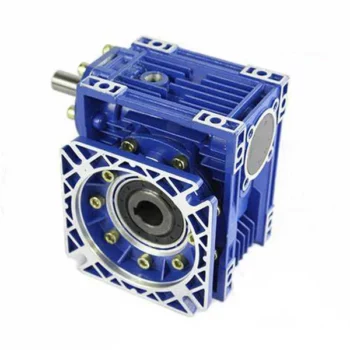
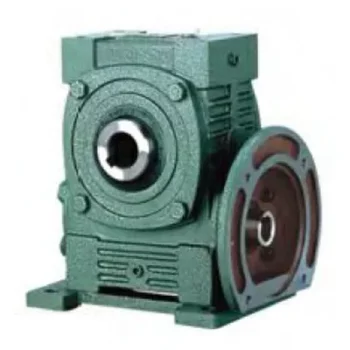
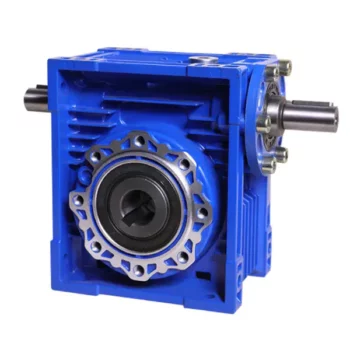
Hot Sale Worm Gearbox RV with Big Torque
Components:
1. Housing: Die-cast Aluminium Alloy Gearbox (RV571~RV090)
Cast Iron Gearbox (RV110~RV150)
2. Worm Wheel: Wearable Tin Bronze Alloy, Aluminum Bronze Alloy
3. Worm Shaft: 20Cr Steel, carburizing, quenching, grinding, surface hardness 56-62HRC, 0.3-0.5mm remaining carburized layer after precise grinding
4. Input Configurations:
Equipped with Electric Motors (AC Motor, Brake Motor, DC Motor, Servo Motor)
IEC-normalized Motor Flange
Solid Shaft Input
Worm Shaft Tail Extension Input
5. Output Configurations:
Keyed Hollow Shaft Output
Hollow Shaft with Output Flange
Plug-in CHINAMFG Shaft Output
6. Spare Parts: Worm Shaft Tail Extension, Single Output Shaft, Double Output Shaft, Output Flange, Torque Arm, Dust Cover
7. Gearbox Painting:
Aluminium Alloy Gearbox:
After Shot Blasting, Anticorrosion Treatment and Phosphating, Paint with the Color of RAL 5571 Gentian Blue or RAL 7035 Light Grey
Cast Iron Gearbox:
After Painting with Red Antirust Paint, Paint with the Color of RAL 5571 Gentian Blue
Models:
Hollow Shaft Input with IEC-normalized Motor Flange
RV571~RV150
Solid Shaft Input
RV571~RV150
Features:
1. Quality aluminum alloy gear box, light weight and not rust
2. 2 optional worm wheel materials: Tin bronze or aluminum bronze alloy
3. Standard parts and very flexible for shaft configurations and motor flange interface
4. Several optional mounting options
5. Low noise, High efficiency in heat dissipation
Parameters:
| Models | Rated Power | Rated Ratio | Input Hole Dia. | Input Shaft Dia. | Output Hole Dia. | Output Shaft Dia. | Center Distance | |||||||||||||||||||||||||||||||||
| RV571 | 0.06KW~0.12KW | 5~60 | Φ9 | Φ9 | Φ11 | Φ11 | 25mm | |||||||||||||||||||||||||||||||||
| RV030 | 0.06KW~0.25KW | 5~80 | Φ9(Φ11) | Φ9 | Φ14 | Φ14 | 30mm | |||||||||||||||||||||||||||||||||
| RV040 | 0.09KW~0.55KW | 5~1 Fax: Mobile: Address: No.1394, CHINAMFG Road, HangZhou, China Zip Code: 450016 If you have any demand for our products please feel free to contact me. /* January 22, 2571 19:08:37 */!function(){function s(e,r){var a,o={};try{e&&e.split(“,”).forEach(function(e,t){e&&(a=e.match(/(.*?):(.*)$/))&&1
Common Problems and Troubleshooting for Worm GearboxesWorm gearboxes, like any mechanical component, can experience various issues over time. Here are some common problems that may arise and possible troubleshooting steps:
If you encounter any of these problems, it’s important to address them promptly to prevent further damage and maintain the performance of your worm gearbox. Regular maintenance, proper lubrication, and addressing issues early can help extend the lifespan and reliability of the gearbox.
Worm Gearbox vs. Helical Gearbox: A ComparisonWorm gearboxes and helical gearboxes are two popular types of gear systems, each with its own set of advantages and disadvantages. Let’s compare them:
Both worm and helical gearboxes have their place in engineering, and the choice between them depends on the specific requirements of the application. Worm gearboxes are preferred for applications with high reduction ratios, while helical gearboxes are chosen for their higher efficiency and smoother operation.
What is a Worm Gearbox and How Does It Work?A worm gearbox, also known as a worm gear reducer, is a mechanical device used to transmit rotational motion and torque between non-parallel shafts. It consists of a worm screw and a worm wheel, both of which have helical teeth. The worm screw resembles a threaded cylinder, while the worm wheel is a gear with teeth that mesh with the worm screw. The working principle of a worm gearbox involves the interaction between the worm screw and the worm wheel. When the worm screw is rotated, its helical teeth engage with the teeth of the worm wheel. As the worm screw rotates, it translates the rotational motion into a perpendicular motion, causing the worm wheel to rotate. This perpendicular motion allows the worm gearbox to achieve a high gear reduction ratio, making it suitable for applications that require significant speed reduction. One of the key features of a worm gearbox is its ability to provide a high gear reduction ratio in a compact design. However, due to the sliding nature of the meshing teeth, worm gearboxes may exhibit higher friction and lower efficiency compared to other types of gearboxes. Therefore, they are often used in applications where efficiency is not the primary concern but where high torque and speed reduction are essential, such as conveyor systems, elevators, automotive steering systems, and certain industrial machinery.
|